 Outdoors Nearby
Waterfall hiking: when to go and how to stay safe
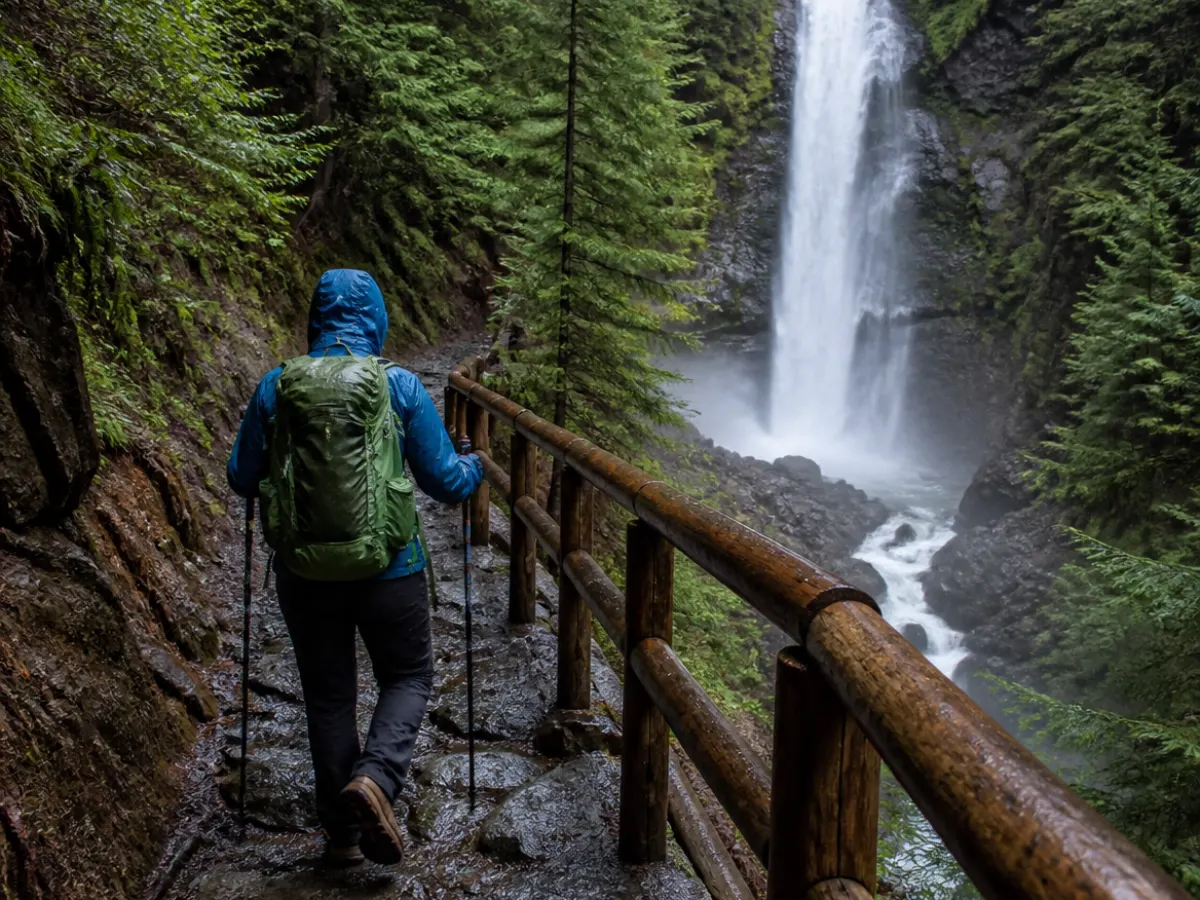
A waterfall hike pays off most in spring and after a good rain, when the falls carry the most water. The same water makes the trail, the rocks and the pool below the riskiest part of the outing. Park and forest rangers warn about the same three things again and again: leaving the trail, climbing on the rocks and going into the water above or below a fall.
We've mapped 4,513 waterfalls across the US from OpenStreetMap. 989 have a recorded height, 126 are marked as seasonal, and for 1,069 we show the nearest trailhead or trail parking.
Best season and flow
Waterfalls depend on what's upstream. Snow-fed falls in the mountains peak during snowmelt, and rain-fed falls in the East and South run hardest in the days after a storm.
| Timing | What to expect |
|---|---|
| Spring snowmelt | Highest flow on snow-fed falls. In Yosemite, peak runoff usually comes in May or June. |
| Right after heavy rain | Rain-fed falls look their fullest; trails are muddy and creek crossings run high. |
| Late summer | Flow drops. Yosemite Falls is often a trickle or dry by August. |
| Winter | Ice forms on spray zones and steps. Some falls freeze, and trails get slick. |
Falls marked as seasonal or intermittent can be completely dry outside the wet months. On our waterfall pages, a "seasonal" tag means you should plan your visit for spring or right after rain.
Why wet rocks and the top of falls are dangerous
Pisgah National Forest in North Carolina tells visitors to stay away from the top of falls and keep off wet rocks. The National Park Service page for Looking Glass Falls adds that the rocks are slippery from mist and algae and that the top of any waterfall is dangerous.
- Rocks: Yosemite warns that the rock around its falls is extremely slippery, even when dry. Algae make it worse.
- The top: currents above a fall can be extremely swift even well upstream, according to the National Forests in North Carolina. One slip in a calm-looking pool can carry you to the edge.
- Climbing: never climb on or around waterfalls. Bare feet make it easier to lose your balance.
- Photos: stand somewhere solid before you take a picture, and don't lean over a ledge at the top of a fall.
Water accidents are the second most common cause of death in Yosemite. Sixteen people died in its creeks and rivers between 2002 and 2011.
Stay on the trail and behind the railing
Use the viewing decks and stay behind railings where they exist. Yosemite and the North Carolina forests both ask you to stay on established trails and follow posted signs. Leaving the trail also tramples plants and erodes the banks, which is why Leave No Trace asks hikers to travel on durable surfaces.
Swimming below waterfalls
A plunge pool can look calm on top and still move hard underneath. The Forest Service in North Carolina warns that waterfall pools often have swirling currents that can drag you down and keep you underwater, and that rocks and logs hide below the surface. Its rule is to never jump off a waterfall or dive into a plunge pool.
Cold water adds a second risk. The National Weather Service says sudden immersion causes involuntary gasping and rapid breathing for the first few minutes, triggered by water as warm as 77°F. Snowmelt-fed pools are far colder. Yosemite notes that strong swimmers can quickly become too weak from hypothermia to swim. If a sign says no swimming, don't swim or wade.
Flash floods and high water
Rain doesn't have to fall on you to flood the creek you're standing in. A storm upstream can send a surge down the canyon on a sunny afternoon. The National Weather Service gives hikers simple rules:
- Check the forecast for the whole watershed, not only the trailhead.
- If the water rises even slightly, climb to higher ground right away.
- Don't wade a stream that runs above your ankles. Six inches of fast-moving water can knock an adult off their feet.
- Unbuckle your pack's hip belt before crossing on rocks or logs, so you can drop it if you fall.
- If the trail is flooded, turn around and take another route.
Trail prep checklist
- Footwear: hiking shoes or boots with a lugged sole. Spray zones and rock steps stay wet all year.
- Winter traction: microspikes or similar devices when the trail is icy. Frozen spray makes steps near falls glassy.
- Water and layers: the air near big falls is cooler and damp, and the hike out is often uphill.
- Leave No Trace: pack out your trash, leave rocks and plants where they are and keep your dog leashed near cliffs.
- Tell someone: share your route and expected return time, since many waterfall trails have no cell signal.
Drones and other etiquette
You can't fly a drone in most national parks. Under 36 CFR 1.5 and Policy Memorandum 14-05, the National Park Service prohibits launching, landing or operating unmanned aircraft on park land, with a few exceptions. State parks and national forests set their own rules, so check with the land manager before you pack one.
At crowded viewpoints, take your photos and step aside so the next group can see. Keep music off and stay on the deck when others are waiting.
Find a waterfall trail and trailhead near you
Our waterfall map lists falls in every state we cover. The states with the most mapped waterfalls are North Carolina (845), Washington (428), California (401), New York (296), Oregon (271) and Arkansas (198).
For 1,069 falls we show the nearest mapped trailhead or trail parking; 682 of those are tagged trailheads. The distance we give is a straight line from the parking to the falls. The trail itself is always longer and may climb, so check the land manager's trail map for the real hiking distance. Every waterfall page also has a directions link and, where known, the height in feet.
Data from OpenStreetMap. Trail conditions, closures and water levels change, so check with the park or forest before you go.
Sources
- NPS Yosemite: waterfalls and water safety
- NPS: Looking Glass Falls, USDA Forest Service: Pisgah Ranger District guide, National Forests in North Carolina waterfall safety release
- Visit NC: waterfall safety tips
- NWS: cold water hazards, NWS Blacksburg: flooding safety outdoors, NWS Boston: flood safety
- NPS: uncrewed aircraft in the national parks
- Leave No Trace: the seven principles