 Outdoors Nearby
Ice skating for beginners: your first public skate session
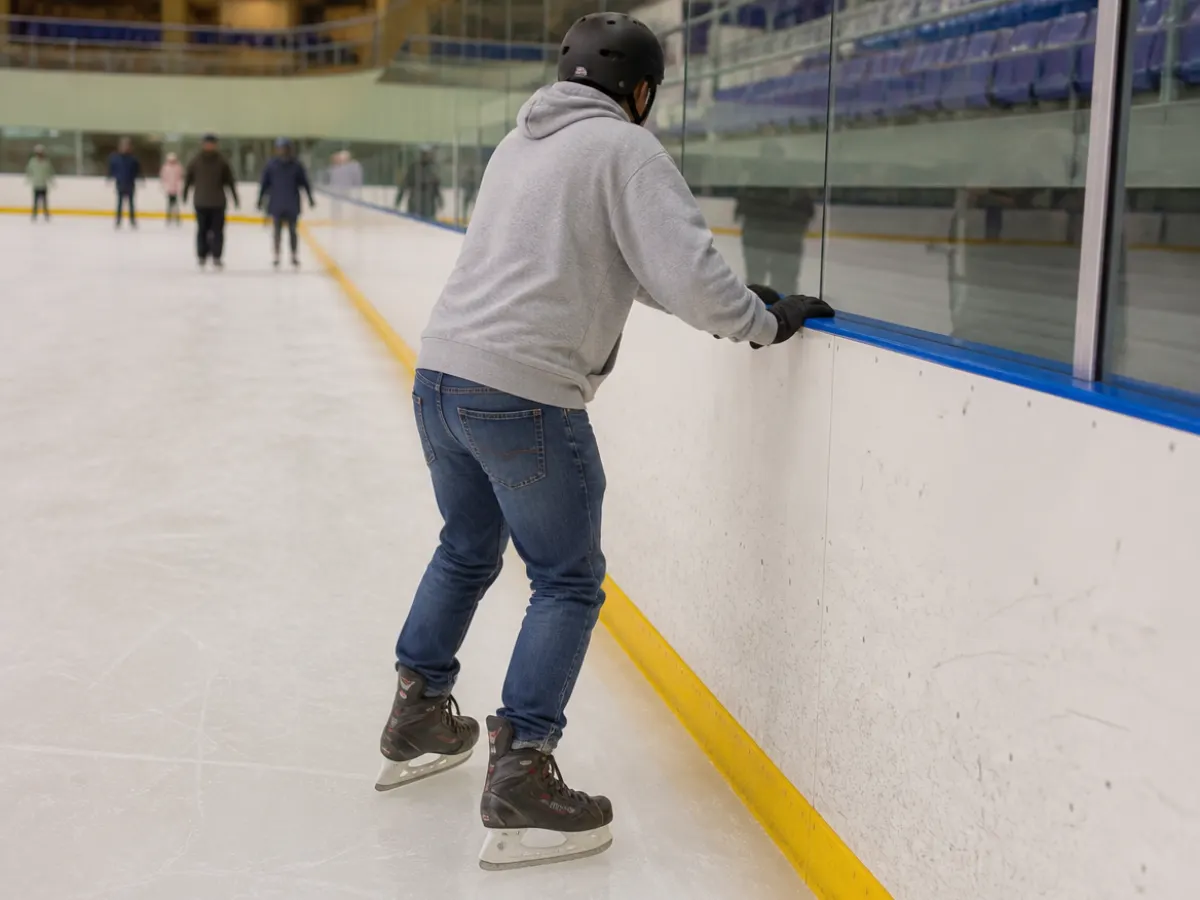
The easiest way to start ice skating is a public skate session at an indoor rink. You pay admission, rent skates at the counter and share the ice with everyone else for a set block of time. You'll fall in the first ten minutes, and that's fine. Learning to get back up is the first real skill, for kids and adults alike.
We've mapped 1,386 ice rinks across the US from OpenStreetMap. 618 are marked as indoor and 371 as outdoor; the rest don't say.
How public skating sessions work
Rinks call them public skate, open skate or general skating. A session is a fixed time slot on the rink's calendar, open to anyone who pays. Hockey practice, figure skating and lessons share the same sheet of ice, so public sessions move around from week to week. Check the schedule online before you drive over.
Admission and skate rental are usually two separate charges. Some rinks also run themed sessions with rental included. Here are prices listed on three rink websites in October 2026:
| Rink | Admission | Skate rental |
|---|---|---|
| Sertich Ice Center, Colorado Springs, CO | $6 youth (17 and under), $7 adults | $3.25 |
| Parade Ice Garden, Minneapolis, MN | $5, seniors $3, under 5 free | $3 |
| Braemar Arena, Edina, MN | $7 | Extra fee |
Sertich also offers cheaper matinee sessions and a $60 to $75 monthly pass with rentals. Prices change, so confirm on the rink's site.
Rental skates and fit
Rental skates come in figure and hockey styles. Figure skates have a toe pick at the front of the blade; hockey skates don't. Learn to Skate USA notes that rental skates are built to fit everyone, so your skate size may not match your shoe size.
- Wear one pair of thin socks. Thick socks bunch up and cause blisters.
- Push your heel all the way back before lacing.
- Lace snug over the foot and tightest around the ankle, so the boot stands upright on its own.
- The closer the fit, the more control you have. Snug is right; pinching is too tight.
What to wear
Arenas are kept cold, and you'll warm up quickly once you move. Learn to Skate USA recommends several layers with a jacket on top, and sweatpants or warm-up pants rather than bulky snow pants. Jeans get wet and stiff after a fall.
Gloves matter more for protection than for warmth. Your hands hit the ice every time you fall or get up, and blades pass close by. A hat or headband helps at outdoor rinks.
Helmets for kids and beginners
Learn to Skate USA says all beginning skaters should wear a helmet. Wear it snug, level and low on the forehead, and replace it after visible damage. That covers adults too, not only children.
Your first steps on the ice
1. Fall on purpose, then get up
Practice falling before it happens by accident. Bend your knees, squat down and tip to one side, so you land on your hip instead of your tailbone or wrists. To stand, roll onto your hands and knees, put one foot flat on the ice between your hands, then the other, and push up. Get up quickly so passing skaters don't run into you.
2. March in place, then forward
Stand with knees and ankles slightly bent, chest up and eyes ahead. Lift one foot a few inches and set it down, then the other, toes turned slightly out. Once that feels steady, march forward along the boards.
3. Glide on two feet
After six or eight marching steps, stop stepping and let both blades carry you. Keep your feet hip-width apart and your weight over the middle of the blade. Keep your eyes up. Staring at your skates tips your weight off balance.
4. Stop with the snowplow
Glide on both feet with knees and ankles bent. Push your feet apart, turn your toes slightly in and press the inside edges of the blades into the ice. You'll scrape a little snow and slow down. Push harder to stop sooner.
Hold the wall at first, but only with one hand. Hanging on with both keeps you leaning and blocks skaters behind you. A plastic skate aid is a better crutch. Parade Ice Garden rents them for $3.
Rink etiquette
- Direction: everyone skates the same way around the rink. The staff set and sometimes switch the direction, so follow the crowd and the signs.
- Speed: skate at a speed where you can stop or swerve. Braemar Arena bans speeding, games and skating against traffic.
- Center ice: spins, jumps and backward skating usually belong in the middle.
- Resurfacing breaks: when the resurfacer doors open, leave the ice right away. Nobody stays on during resurfacing.
- Adjustments: step off the ice to retie laces or fix gear.
- Little ones: don't carry a child while you skate. Many rinks ban it.
Outdoor rinks and natural ice
Many cities flood outdoor rinks in parks each winter. A maintained, staffed city rink is the safest way to skate outside. Ponds and lakes are a different story.
The Minnesota DNR recommends at least 4 inches of new, clear ice for anything you do on foot, including skating. White, snowy ice is weaker, so double that figure. Ice thickness also varies across one pond, especially near inlets, docks and moving water. The DNR's main rule is that ice is never 100% safe. Measure it yourself with an auger or spud bar, skate with someone else and keep away from dark or slushy spots.
Beginner lessons with Learn to Skate USA
If you want to go beyond the wall, group classes speed things up a lot. Learn to Skate USA is the beginner program endorsed by U.S. Figure Skating, USA Hockey and US Speedskating. It runs at more than 1,000 rinks with tracks for preschoolers, kids, adults and skaters with disabilities. After the basic levels you can move into figure skating, hockey or speed skating. The program finder on its website lists classes near you.
Find public ice skating near you
Our ice rink map covers indoor arenas and outdoor rinks across the country. The states with the most mapped rinks are Minnesota (290), Massachusetts (152), New York (116), Wisconsin (92) and Michigan (86). Cities with several rinks include Fargo (13), Anchorage (12), Moorhead (12), Apple Valley (10) and Grand Forks (9).
Data from OpenStreetMap. Public skate times change weekly, so check the rink's calendar before you go.
Sources
- U.S. Figure Skating: Learn to Skate USA, The first day of skating and Safe skating rules
- Learn to Skate USA basic skating techniques (Broadmoor World Arena)
- Minnesota DNR: ice thickness guidelines
- Sertich Ice Center, Parade Ice Garden, Braemar Arena open skating (prices and rules)
- Worcester Common Oval: rink rules